- Froghemoths are actually sapient on their native world, but the chemical composition of this world's atmosphere is a neurotoxin to them that gives adults brain damage and stunts the mental development of the young. No froghemoth on this world has ever died of old age, only the accumulated effects of these poisonous gases in their system, which build up over the years like heavy metal poisoning.
- Froghemoths neither lay eggs nor birth live young but reproduce by budding a new froghemoth at the back of their throat, which they vomit forth when it is developed enough to survive. A gravid froghemoth cannot swallow, and the process takes the better part of three years, which is why they are so ravenous the rest of the time
- Froghemoths are artificial life-forms, created to be piloted by gnome-sized mechanical creatures-- in essence, they are reverse mechas. Their strange and aggressive behavior is due to their AI going haywire if left on autopilot too long.
- Froghemoth proteins have reverse chirality to the creatures of this world-- their flesh is indigestible and provides almost no nutritional value. Roast froghemoth tentacle is a popular solution for rich adventurers and nobles trying to lose weight. This also means they are dependent on food from their own world or magically-created food.
- Some think that Froghemoths howl at the moon, but that's a misconception. They howl in despair and confusion at finding that this planet has three moons fewer than they expect to see in the sky.
- Froghemoths are to Bullywugs what Father Dagon is to the Deep Scum.
- Froghemoth eyes make excellent scrying devices, but all three must be used by identical triplets for them to be at their most effective.
- Froghemoths are actually more closely related to our horses than to our frogs.
- The moisture in a froghemoth's body is mostly oil rather than water-- anywhere you find one there are surely petroleum deposits nearby that it has been drinking from.
- Froghemoths cannot digest brains, they store them in an internal pouch that eventually links each brain to their nervous system. While this does little for their intelligence (as the brains function too fundamentally differently), it does improve their reflexes and reaction times. Illithids sometimes tame froghemoths to use as shock cavalry as humans might tame elephants, and at the end of a long career, the froghemoth will be slaughtered and the aged brains feasted upon-- most illithids consider them an acquired taste and enjoying them to be a mark of fine breeding.
- Froghemoths make for natural alchemical plants-- various bodily fluids, hormones, and secretions in their bodies can be distilled to form a wide variety of useful potions.
- Froghemoths have no bones, they're supported by a system of muscular and cartilaginous rings like the squids in The Future Is Wild-- and in fact, their skin is as fragile as rice paper; their natural armor comes almost entirely from the toughness of these rings.
Showing posts with label Monsters. Show all posts
Showing posts with label Monsters. Show all posts
Monday, November 7, 2016
Rumors about Froghemoths
Just thought I'd come up with some ideas for everyone's favorite giant three-eyed alien monsters. Roll a dice or whatever to find out which ones are true.

Sunday, September 21, 2014
13 Monstrous rumors
Some ideas I had while paging through the 5e Monster Manual (which I'm quite impressed with, I may have to write a review later.)
- The basilisk is the female of the species. The cockatrice is male. To stumble upon them as they mate is not a pleasant experience.
- There once lived an albino red dragon whose favorite amusement was battling wizards who, believing him to be a white dragon, had filled their minds with fire spells.
- Erelhei-Cinlu and Menzoberranzan are the drow equivalent of the (ahem) Deep South. While dark elf society is decadent and duplicitous, other drow mock their excessive devotion to Lolth and cultural obsession with slavery.
- Dryads love to ride on the shoulders of treants. It makes them feel safe.
- Gargoyles only move when no one is watching... or so they believe; they are in fact rather poor judges of other creatures' visual acuity.
- All genies are able to grant wishes, but only nobles are authorized to do so.
- Ghouls and ghasts are actually a living race, not a type of undead, they merely recoil from holiness as if they were.
- Ice devils are not truly devils, but have lived in the nine hells so long as to work their way into the hierarchy anyhow.
- It is a mercy that the Invisible Stalker cannot be seen, and an even greater one that enchantments to see the invisible relay only a vague, formless outline. Those under the effects of truesight who have seen an Invisible Stalker uncloaked invariably retreat beyond the farthest shores of madness.
- "Blibdoolpoolp" is just an approximation of the name of the Kuo-Toa's lobster-headed goddess. Her real name is pronounced identically to the last three bubbles of air that leave a drowning man's lungs.
- In the far north, the deathless creature we call a mummy is known as a draugr.
- A shadow that impresses Orcus may become a shadow demon.
- All wraiths are bound to a magical item they coveted in life, all wights are bound to the tomb in which they were buried, and all spectres to a particular bloodline they wish to exterminate.
Thursday, January 16, 2014
In which a thought experiment about demons commences
If you look at the 1e monster manual, you may notice something interesting about the Type I-VI demons: the names applied to them (Vrock, Hezrou, Glabrezu, Nalfeshnee, Marilith, and Balor) were meant (explicitly in the type IV and above, and implicitly in the types I-III) as individual names, but later on the names on the list were applied to each demon type as a whole.
Which is where I come in. If a Vrock is a spiky vulture man demon, what other sorts of Type I demons could there be? I'm going to take the Gorgonmilk approach over the next few weeks: together we'll describe 13 demons of each type. One from Gary, a few from me, and the rest from you, my readers. The only rules that apply are that they should reasonably be able to correspond to the abilities of the demon as featured in the Monster Manual. One or two little changes are fine, but most of the statblock should remain useful.
Which is where I come in. If a Vrock is a spiky vulture man demon, what other sorts of Type I demons could there be? I'm going to take the Gorgonmilk approach over the next few weeks: together we'll describe 13 demons of each type. One from Gary, a few from me, and the rest from you, my readers. The only rules that apply are that they should reasonably be able to correspond to the abilities of the demon as featured in the Monster Manual. One or two little changes are fine, but most of the statblock should remain useful.
Wednesday, December 11, 2013
New Monster: Diamond Dogs
Diamond Dogs
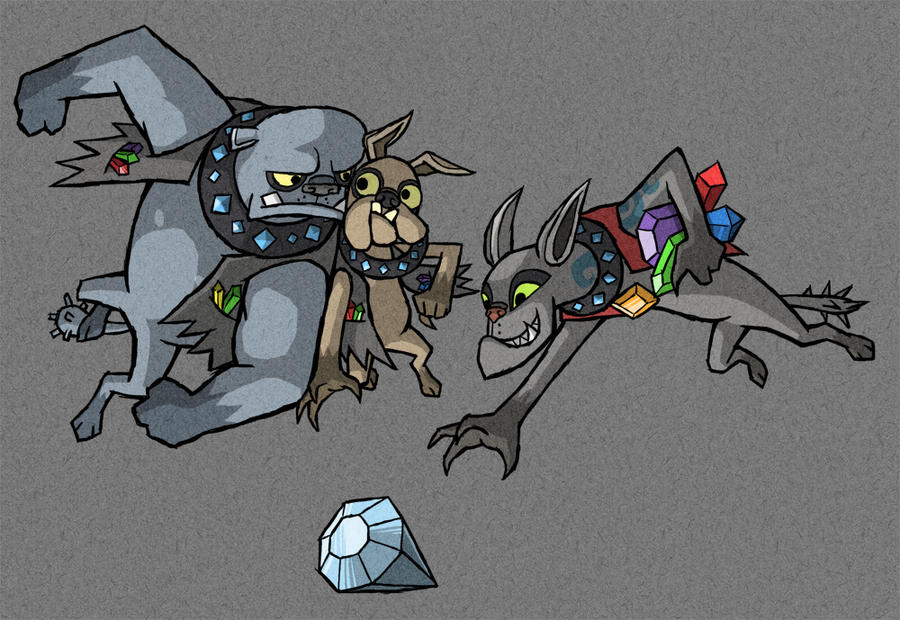 (Formatted for BFRPG, as usual)
Armor Class: 13
Hit Dice: 1*
Number of attacks: 1
Damage: 1d6 or by weapon
Movement: 40', burrow 20'
Number Appearing: 1d6, Wild 5d4, Lair 5d4
Save as: F1
Morale: 6
Treasure Type: D (additional 30% chance of gems and jewelry)
XP: 37
Diamond Dogs are pug-faced, stooped humanoids that range from the size of a kobold to that of a dwarf. They are fond of gemstones of all types (favoring quantity over quality) but are supremely lazy and covetous, preferring to steal gems or kidnap others to work in their mines whenever possible (particularly those who have magical abilities that can help them find more gems). To that end, Diamond Dogs often fight to subdue, so that their new slaves will be ready to work as soon as possible. Their powerful claws, though not made for fighting, enable them to burrow through earth at a surprising speed. They have little concept of personal hygiene and are often smelled before they are seen. On top of their many other vices, Diamond Dogs are cowardly, and can easily be persuaded to return their slaves if they have reason to believe that keeping them will be more trouble. Despite being unrepentantly selfish and evil, most do not really have it in them to kill or mistreat captives, only threaten and bully them.
Armor Class: 13
Hit Dice: 1*
Number of attacks: 1
Damage: 1d6 or by weapon
Movement: 40', burrow 20'
Number Appearing: 1d6, Wild 5d4, Lair 5d4
Save as: F1
Morale: 6
Treasure Type: D (additional 30% chance of gems and jewelry)
XP: 37
Diamond Dogs are pug-faced, stooped humanoids that range from the size of a kobold to that of a dwarf. They are fond of gemstones of all types (favoring quantity over quality) but are supremely lazy and covetous, preferring to steal gems or kidnap others to work in their mines whenever possible (particularly those who have magical abilities that can help them find more gems). To that end, Diamond Dogs often fight to subdue, so that their new slaves will be ready to work as soon as possible. Their powerful claws, though not made for fighting, enable them to burrow through earth at a surprising speed. They have little concept of personal hygiene and are often smelled before they are seen. On top of their many other vices, Diamond Dogs are cowardly, and can easily be persuaded to return their slaves if they have reason to believe that keeping them will be more trouble. Despite being unrepentantly selfish and evil, most do not really have it in them to kill or mistreat captives, only threaten and bully them.
Saturday, November 16, 2013
They have a Cave Troll...
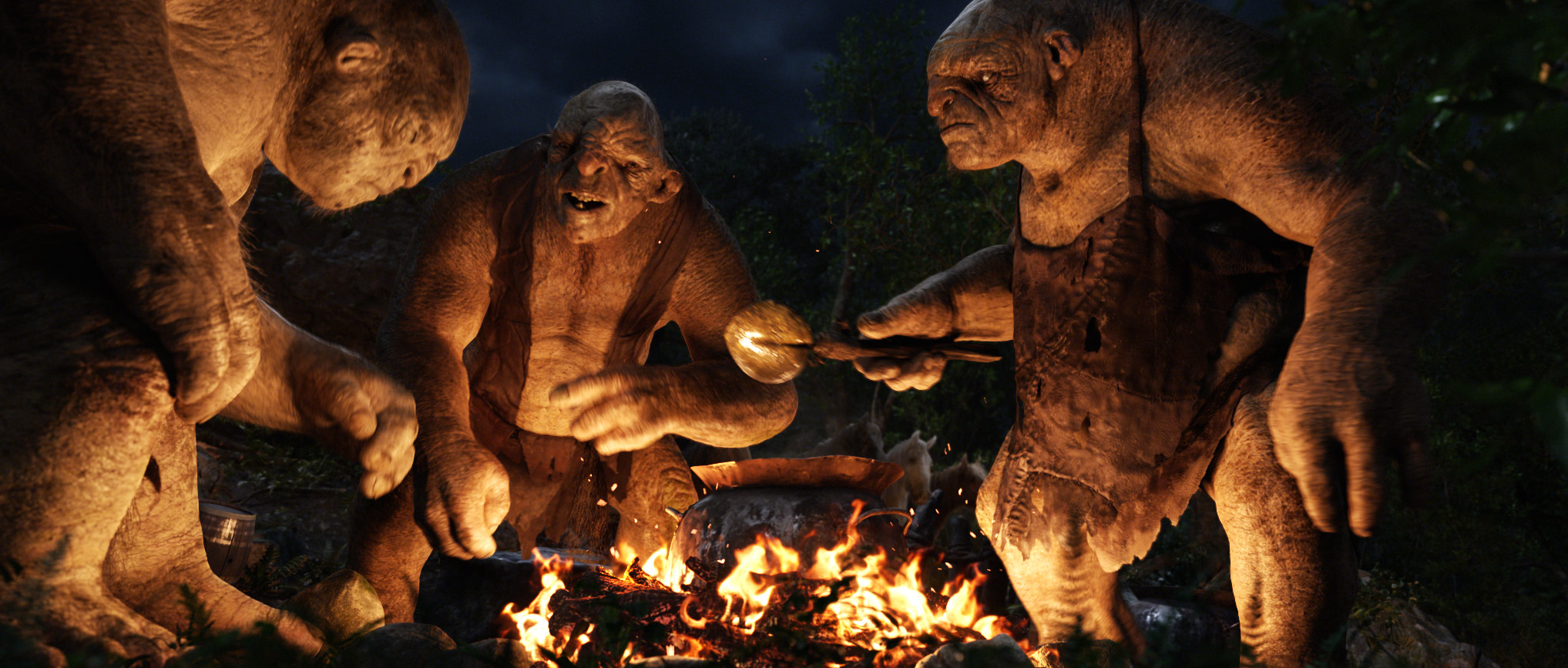
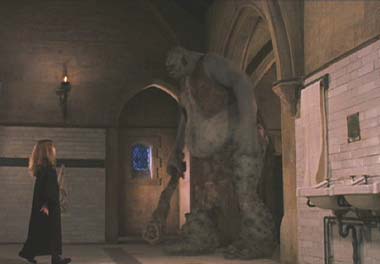
Troll, Cave
Armor Class: 18
Hit Dice: 7*
No. of Attacks: 2 claws/1 bite or 1 weapon/1 bite
Damage: 1d6/1d6/1d10 or by weapon/1d10
Movement: 40'
No. Appearing: 1d8, Wild 1d8, Lair 1d8
Save As: Fighter: 7
Morale: 10 (8)
Treasure Type: D
XP: 735
Evolutionary cousins of the more widespread forest troll and scrag, or river troll, cave trolls, sometimes known as mountain trolls, are easily distinguished from their brethren by their grey, lumpy skin, bulkier frame, and diminished noses. Cave trolls lack the feral cunning of their cousins, though they have a somewhat greater aptitude for (extremely rough) speech and tool use, often brandishing heavy branches or even crude spears in battle. Although like all trolls they are fast healers, a cave troll's wounds mend in hours rather than minutes, and it has no affinity for regrowing lost appendages. Its primary means of defense instead lies in its extremely thick, rubbery skin, which is studded with rock-hard osteoderms like those of an Ankylosaur. So well-protected is a cave troll's hide that nothing short of a magic weapon can pierce it (though like all trolls, fire and acid have also proven deadly to them). Cave trolls also fear the sun, and are scrupulously nocturnal, for it is their greatest weakness. Exposing a cave troll to direct sunlight disorients it: It can act for only one round and is turned to stone in the next round if it cannot escape. Use the morale value in parentheses if a cave troll is confronted with fire, acid, or bright lights (at least the equivalent of a Continual Light spell). Cave trolls stand ten feet tall (when they manage to straighten up to their full height) and commonly reach a ton or more in weight.
Stats given are for BFRPG, but I'm sure you know how to convert the parts that need converting for your system of choice.
Armor Class: 18
Hit Dice: 7*
No. of Attacks: 2 claws/1 bite or 1 weapon/1 bite
Damage: 1d6/1d6/1d10 or by weapon/1d10
Movement: 40'
No. Appearing: 1d8, Wild 1d8, Lair 1d8
Save As: Fighter: 7
Morale: 10 (8)
Treasure Type: D
XP: 735
Evolutionary cousins of the more widespread forest troll and scrag, or river troll, cave trolls, sometimes known as mountain trolls, are easily distinguished from their brethren by their grey, lumpy skin, bulkier frame, and diminished noses. Cave trolls lack the feral cunning of their cousins, though they have a somewhat greater aptitude for (extremely rough) speech and tool use, often brandishing heavy branches or even crude spears in battle. Although like all trolls they are fast healers, a cave troll's wounds mend in hours rather than minutes, and it has no affinity for regrowing lost appendages. Its primary means of defense instead lies in its extremely thick, rubbery skin, which is studded with rock-hard osteoderms like those of an Ankylosaur. So well-protected is a cave troll's hide that nothing short of a magic weapon can pierce it (though like all trolls, fire and acid have also proven deadly to them). Cave trolls also fear the sun, and are scrupulously nocturnal, for it is their greatest weakness. Exposing a cave troll to direct sunlight disorients it: It can act for only one round and is turned to stone in the next round if it cannot escape. Use the morale value in parentheses if a cave troll is confronted with fire, acid, or bright lights (at least the equivalent of a Continual Light spell). Cave trolls stand ten feet tall (when they manage to straighten up to their full height) and commonly reach a ton or more in weight.
Stats given are for BFRPG, but I'm sure you know how to convert the parts that need converting for your system of choice.
Thursday, September 19, 2013
Okay I promise this will be the last post about how devils look for a while
My man Shonuff over at the Basic Fantasy RPG forums agreed to take my request for devil designs, and I'm proud to report that three are already done.
There's the Barbed Devil:

9/22: The Bearded Devil

9/23: The Chain Devil. Man that looks metal.

The Ice Devil (which I showed you before:

And the Pit Fiend (with, apparently, a friend):
 I'm extremely happy with them, and if he does the rest I'll add them to this post later.
There's the Barbed Devil:
9/22: The Bearded Devil
9/23: The Chain Devil. Man that looks metal.
The Ice Devil (which I showed you before:
And the Pit Fiend (with, apparently, a friend):
Saturday, September 14, 2013
On overcoming my problem with demons and devils Part two: Devils (this one is less heavy on the pictures)
Okay, so when last we left off I was gonna get into devils, yes?
Devil Overview
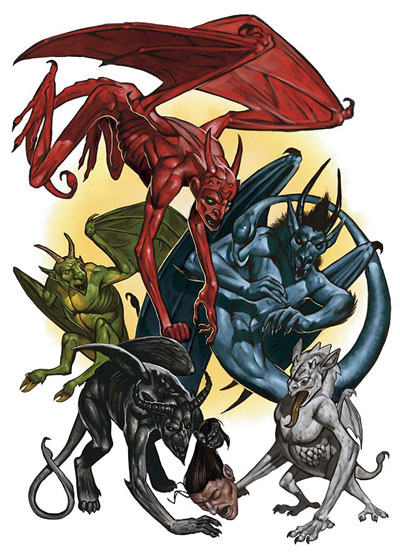
I think that in general devils should look more consistent and alike than demons do. That imp back in the other post, or the abishai from way back in the first post of the series? Those are my template for demonkind. Here they are again if you want a refresher.

So keep that in mind.
Barbed Devil
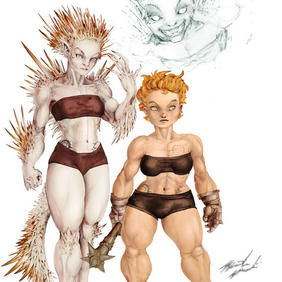
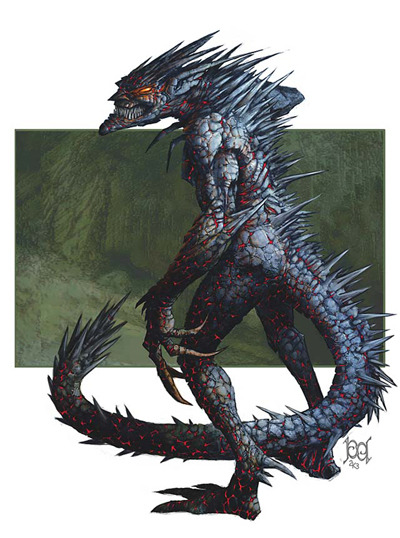
I actually have a really specific vision of what a barbed devil should look like in my head, and it comes down to this: Porcupine quills. This should be a devil with lots of porcupine quills. The illustrations are always this weird chupacabra guy and I hate 'im. Sadly I couldn't find an exact illustration of what I've always thought they should look like. Here's a couple of devils that do have nice quills though.

Bearded Devil
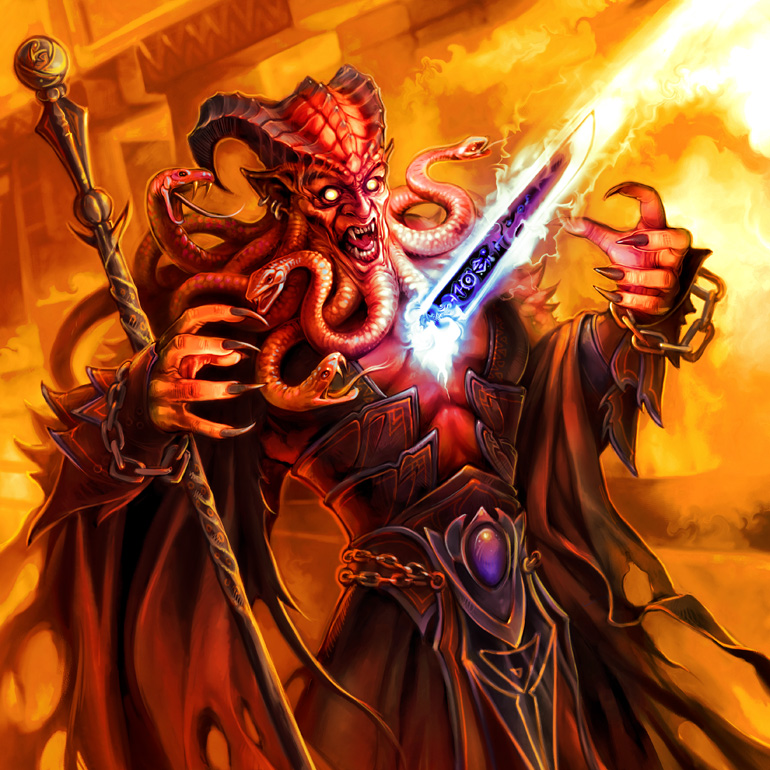
A lot of the old illustrations of bearded devils look...grubby. I don't like that, I think a devil should tend to look professional, I guess. This 4e Dragon Magazine cover does something interesting by making the beard out of snakes. That could work for me. Though actually... I also kind of dig the idea of the beard being a bunch of horn spikes, or having blades braided into it or something. I dunno.
UPDATE 9/16: Had a thought yesterday I quite like: The beard has burning strands of matchcord or embers in it like Blackbeard, wreathing the face in nasty, brimstoney smoke.
Bone Devils
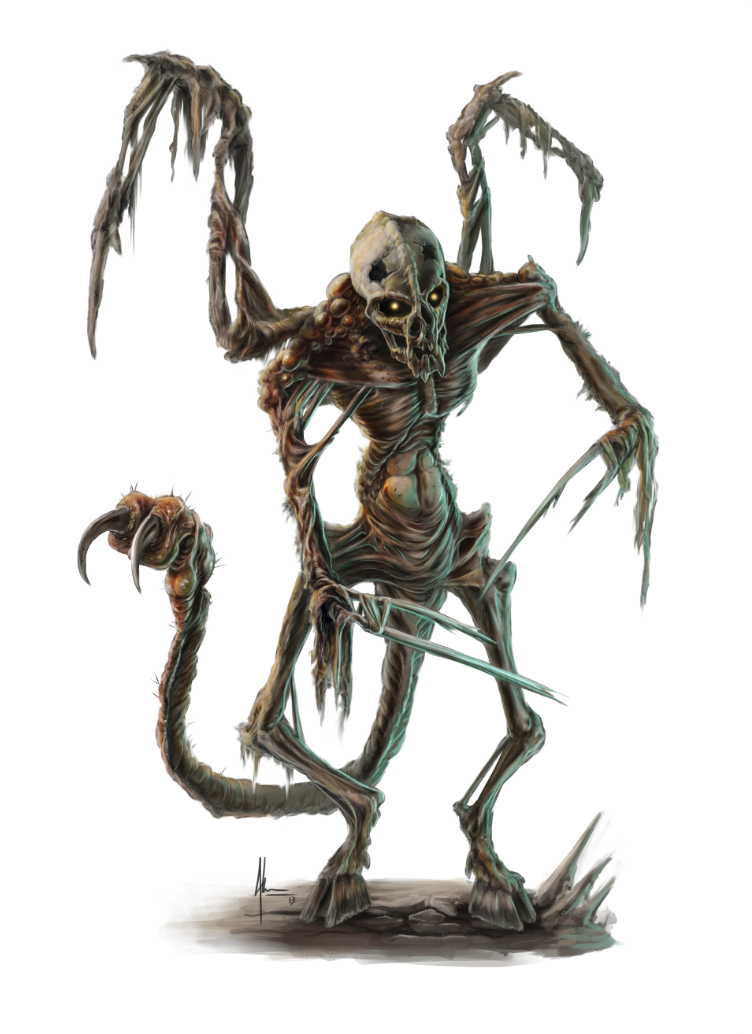
Actually, not too bad either, though some old versions of them have insect wings that I thinktotally take the wind out of their sails. I'd like to see more typical horns and wings on one of these just to see how it goes. I think the name for them is kind of bad, something like "hunger devil" or something might have been cooler. Or else give them some better connection to bones than just being skeletally thin.

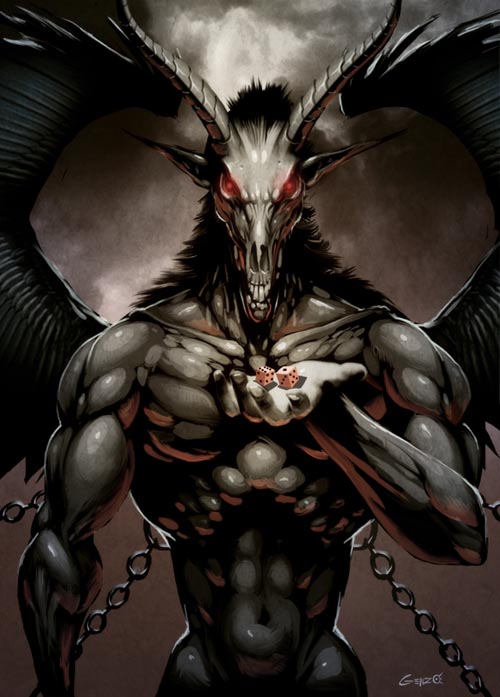
Chain Devils
My brother is really fond of these guys. I think they look like knockoff cenobites. But the idea of a "chain devil" works for me, I could see cool stuff happening with it. I hear pathfinder spun Kytons off into their own thing separate from devils. I don't know if that's an improvement or a detriment to them. I see them as having a couple of great big heavy piercings (one on each arm, one between the wings, one between the horns, et cetera) that they hang chains off of. Sometimes they're bound by nailing the chain to one. Maybe a bit like this?


Erinyes
Fallen angels are good. I like them more as punishers, as their name implies, than as the lawful equivalent of succubi. I think Pathfinder might have wrote them that way? They drag you to hell. They probably get a lot less pretty as they get more pissed. I don't think they're actual devils, but they are part of the forces of hell.
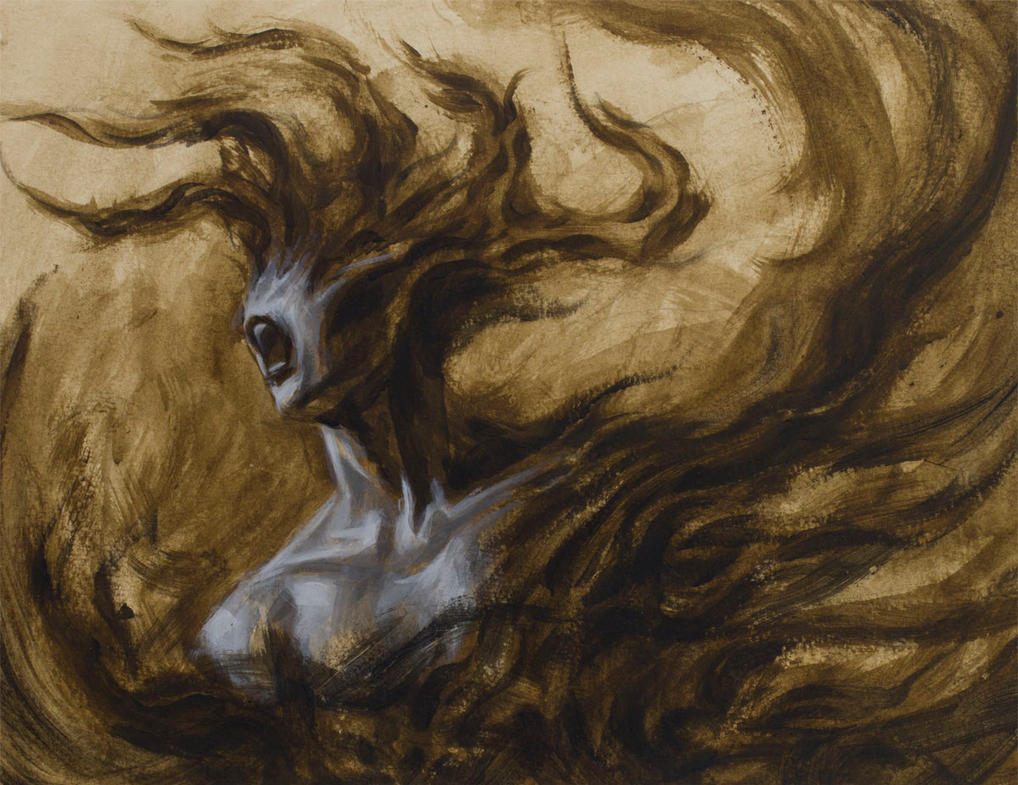 Horned Devil
Well... aren't they all? I like horned devils to have big, impressive ones, maybe unique. Antlers are a good look, but also those times Hellboy's horns have grown out all the way are good. Or maybe they have rhino or triceratops or styracosaurus horns? Lots of good possibilities here. I tend to see them as being more on the aristocratic, lordly side, but powerfully built.

 Ice Devil
Actually, this pic was a factor in me thinking about the appearances of demons and devils in the first place. For some reason this picture totally says "ice devil" to me. I've never been huge on the insectoid appearance of the ice devil traditionally, because it seems so inconsistent with the rest. A beetle carapace on thisguy could be kind of interesting.
Lemures
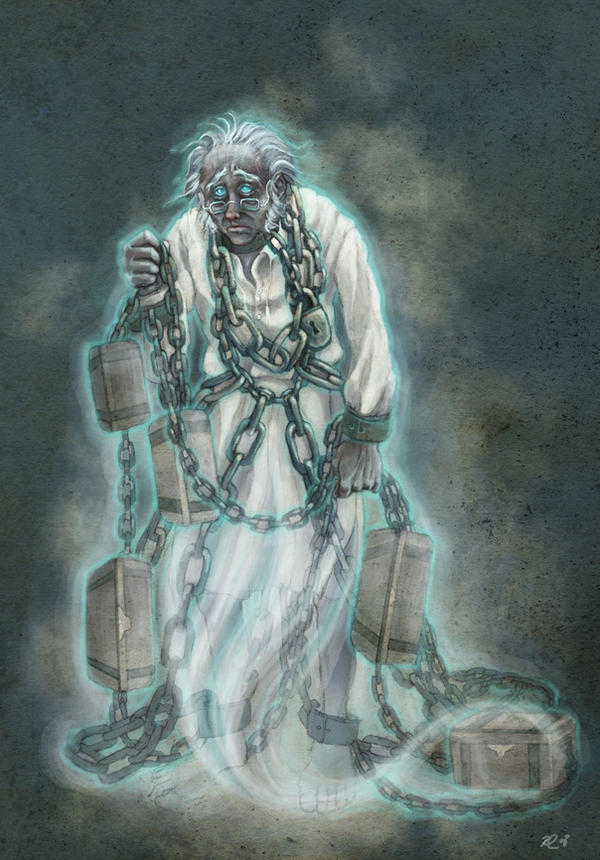
Aren't lemures just damned souls? I dunno, they probably just look kind of ghosty. I can't remember the last time I thought too hard about it. Properly speaking I don't think they count as devils. Maybe they're all chained up like Jacob Marley?
 Pit Fiend
These guys have a problem: They're just lawful balors. Solution, make them more princely, more Mephisto. They are men of wealth and taste. Probably wear robes.
Devil Overview
I think that in general devils should look more consistent and alike than demons do. That imp back in the other post, or the abishai from way back in the first post of the series? Those are my template for demonkind. Here they are again if you want a refresher.
So keep that in mind.
Barbed Devil
I actually have a really specific vision of what a barbed devil should look like in my head, and it comes down to this: Porcupine quills. This should be a devil with lots of porcupine quills. The illustrations are always this weird chupacabra guy and I hate 'im. Sadly I couldn't find an exact illustration of what I've always thought they should look like. Here's a couple of devils that do have nice quills though.
A lot of the old illustrations of bearded devils look...grubby. I don't like that, I think a devil should tend to look professional, I guess. This 4e Dragon Magazine cover does something interesting by making the beard out of snakes. That could work for me. Though actually... I also kind of dig the idea of the beard being a bunch of horn spikes, or having blades braided into it or something. I dunno.
UPDATE 9/16: Had a thought yesterday I quite like: The beard has burning strands of matchcord or embers in it like Blackbeard, wreathing the face in nasty, brimstoney smoke.
Bone Devils
Actually, not too bad either, though some old versions of them have insect wings that I thinktotally take the wind out of their sails. I'd like to see more typical horns and wings on one of these just to see how it goes. I think the name for them is kind of bad, something like "hunger devil" or something might have been cooler. Or else give them some better connection to bones than just being skeletally thin.
Chain Devils
My brother is really fond of these guys. I think they look like knockoff cenobites. But the idea of a "chain devil" works for me, I could see cool stuff happening with it. I hear pathfinder spun Kytons off into their own thing separate from devils. I don't know if that's an improvement or a detriment to them. I see them as having a couple of great big heavy piercings (one on each arm, one between the wings, one between the horns, et cetera) that they hang chains off of. Sometimes they're bound by nailing the chain to one. Maybe a bit like this?
Erinyes
Fallen angels are good. I like them more as punishers, as their name implies, than as the lawful equivalent of succubi. I think Pathfinder might have wrote them that way? They drag you to hell. They probably get a lot less pretty as they get more pissed. I don't think they're actual devils, but they are part of the forces of hell.
Well... aren't they all? I like horned devils to have big, impressive ones, maybe unique. Antlers are a good look, but also those times Hellboy's horns have grown out all the way are good. Or maybe they have rhino or triceratops or styracosaurus horns? Lots of good possibilities here. I tend to see them as being more on the aristocratic, lordly side, but powerfully built.
Actually, this pic was a factor in me thinking about the appearances of demons and devils in the first place. For some reason this picture totally says "ice devil" to me. I've never been huge on the insectoid appearance of the ice devil traditionally, because it seems so inconsistent with the rest. A beetle carapace on thisguy could be kind of interesting.
Aren't lemures just damned souls? I dunno, they probably just look kind of ghosty. I can't remember the last time I thought too hard about it. Properly speaking I don't think they count as devils. Maybe they're all chained up like Jacob Marley?
These guys have a problem: They're just lawful balors. Solution, make them more princely, more Mephisto. They are men of wealth and taste. Probably wear robes.
On overcoming my problem with demons and devils Part one: Demons (Abnormally picture-heavy for my standards)
Okay, so last night's post was kind of a haze of exhaustion, but I hope it was still clear.
Anyway, I want to relate what's happened to me this afternoon. I was looking through the "more like this" page for this picture:
When I stumbled upon a glabrezu drawn by the same artist. And... it didn't look like a four-armed dog-crab-ape-guy, it looked like... well, a demon. So I decided to do a little experiment-- I'd look for demons and devils of a similar nature to the classic D&D ones.
And lo and behold: results!
Type I
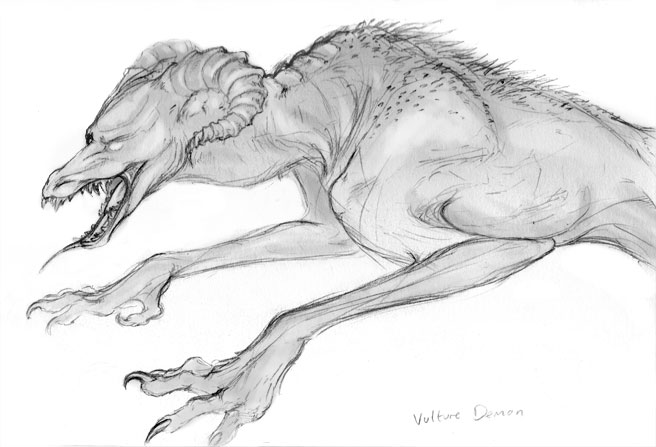
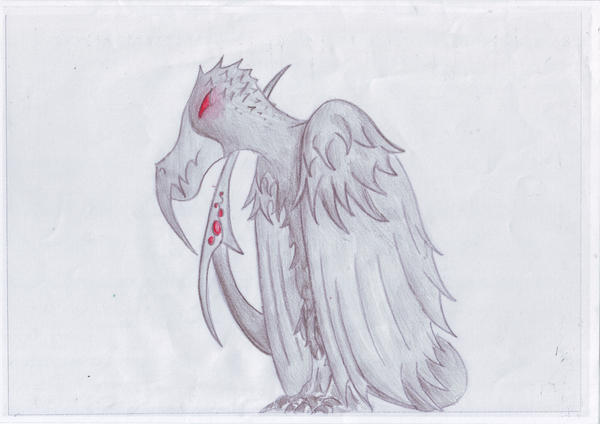
I actually like Vrocks a lot. Something about a lanky, stooping vulture-man is Boschy enough to stand out, but seems classic enough to suit my sensibilities. In my mind they hardly need fixing at all, just a reminder that they should be less a person that is a vulture and more some kind of horrible vulture that walks like a man, so here's some that are just nice examples of awesome vulture demons:

 Type II
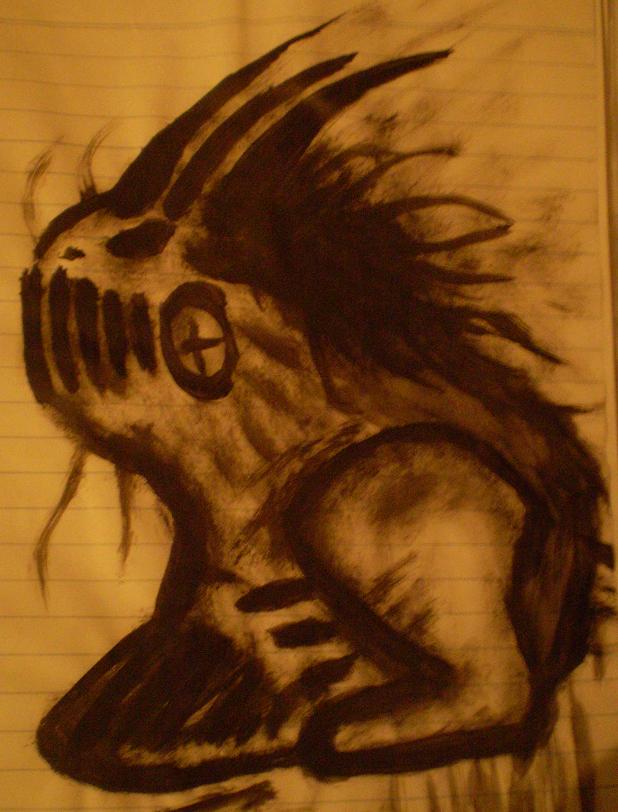
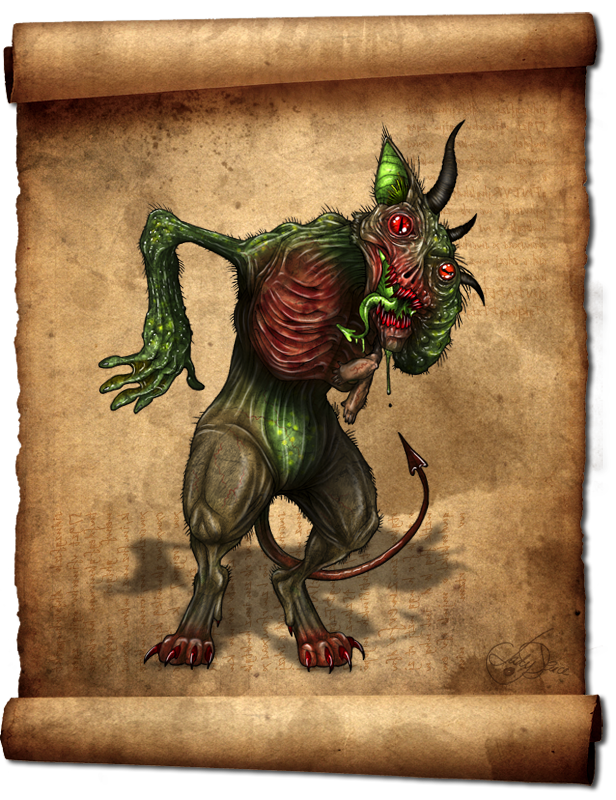
Now Hezrou, them I don't like. D&D is littered with toad monsters, from slaads to bullywugs to froghemoths to just plain old giant frogs and toads. They need an angle. But starting from toad isn't too bad, toads are warty and gross and associated with witches sometimes. However the goal is less a toad-demon and more a demon that is sort of toadlike in execution. These three hit the spot for me:

 Type III
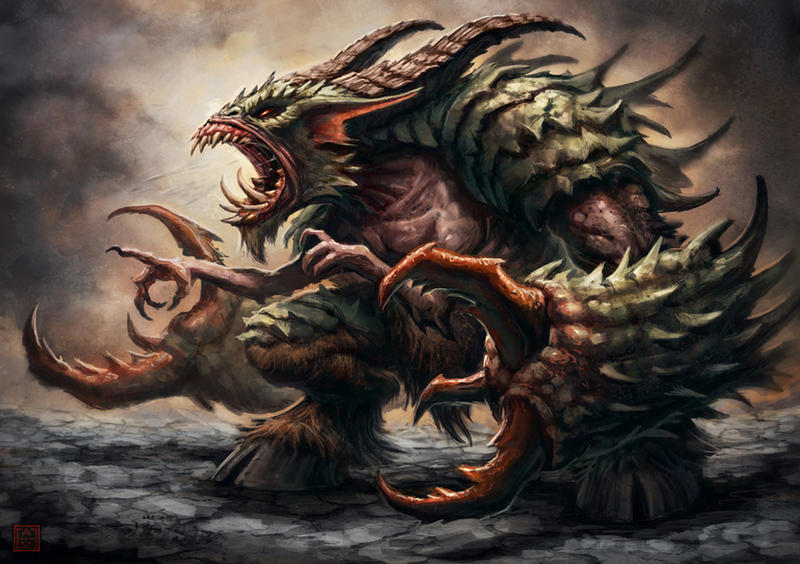
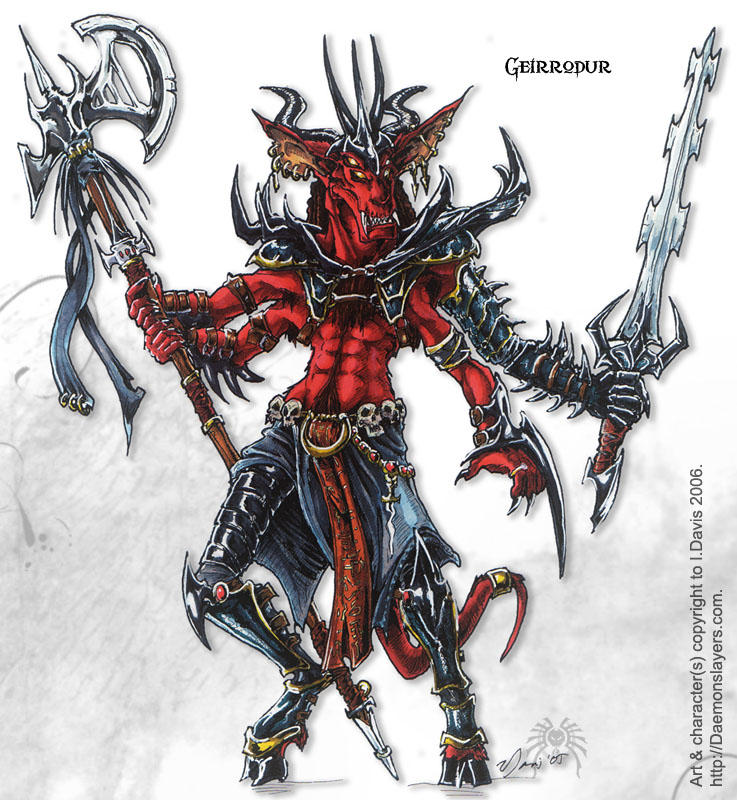
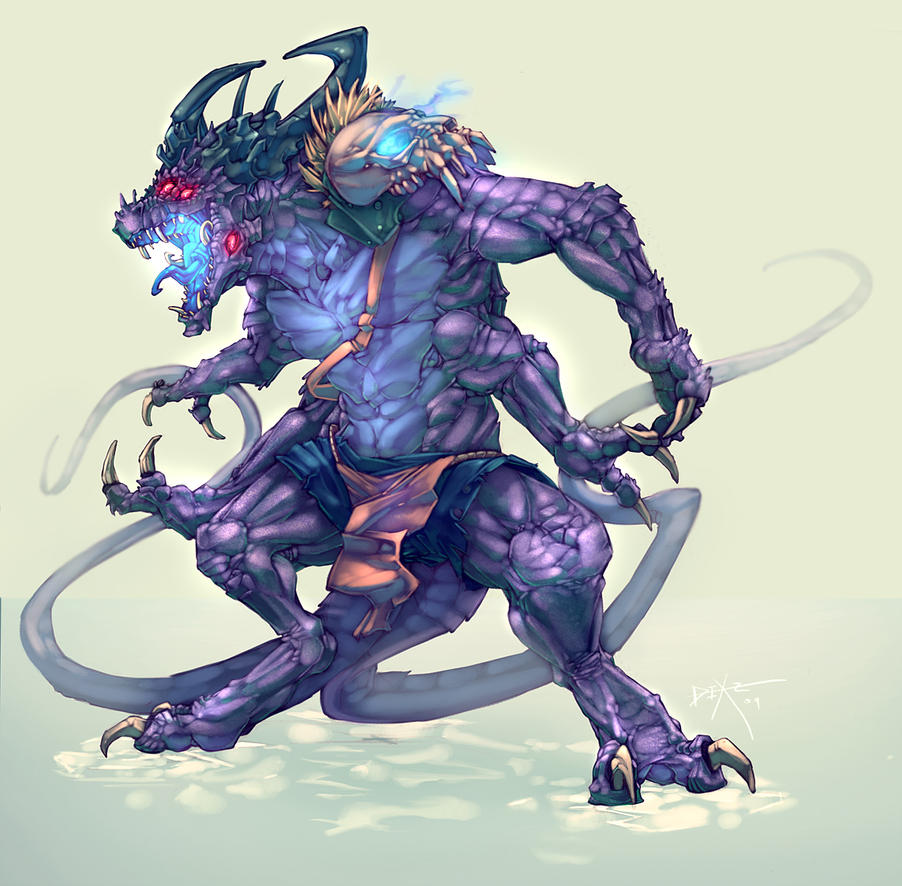
Glabrezu are so absurdly specific in their design I thought I could never like one. But this is the pic that kicked this whole silly art show off. This doesn't look like a thrown-together mass of animal parts, it just looks like a demon to me.
 I think being hulking and four armed works in general-- searching for "four armed demon" resulted in a couple other winners:
 Type IV
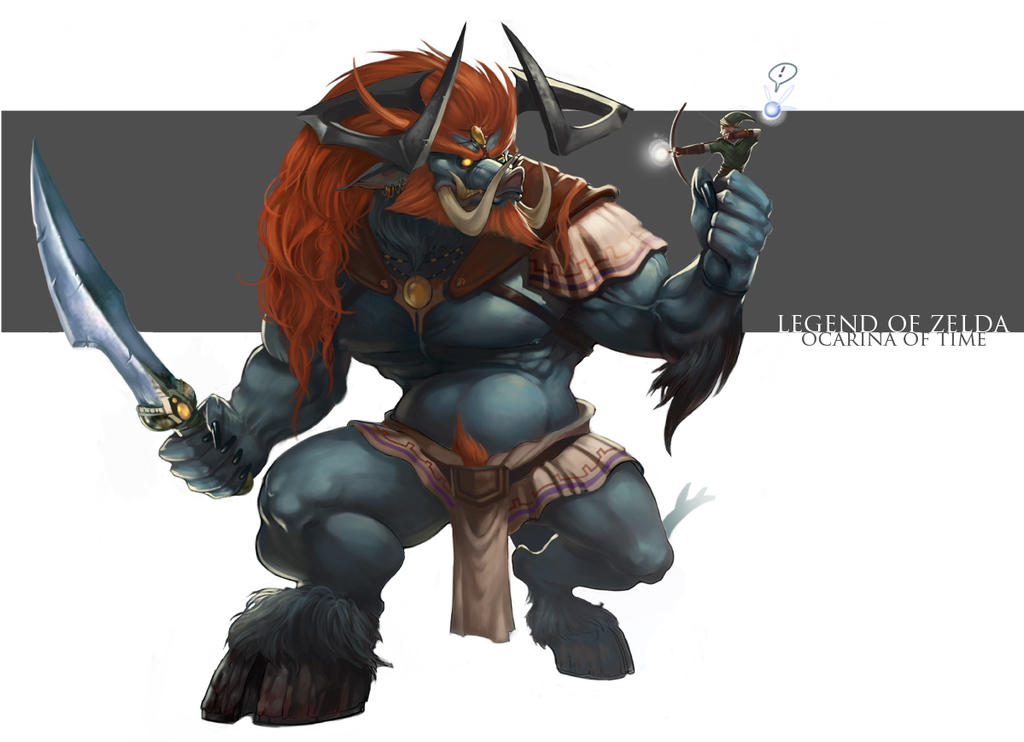
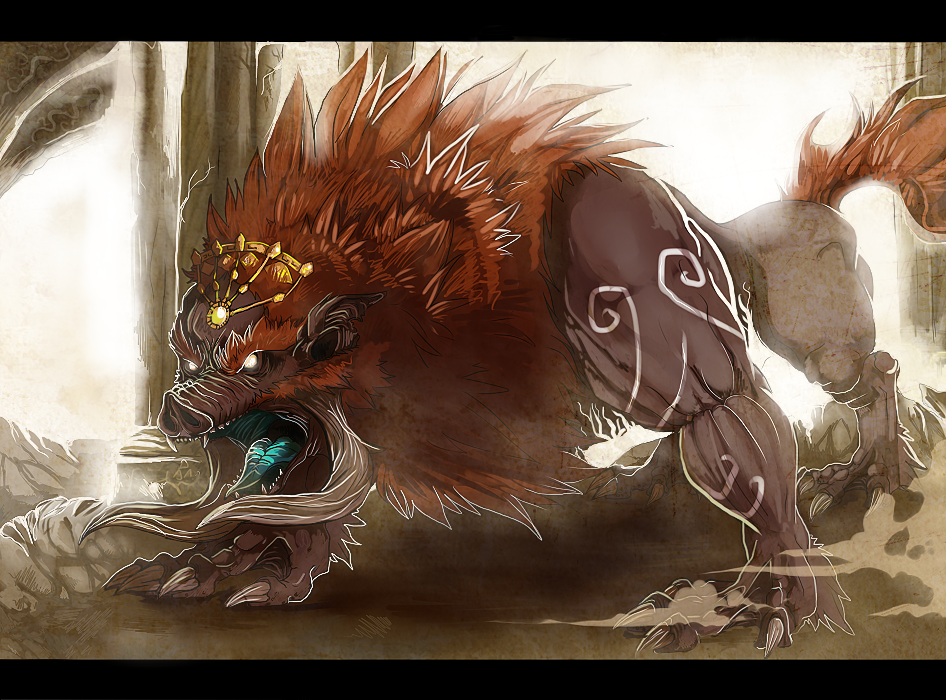
I can't hate Nalfeshnee too much actually. I think boars work. But the standard of giving them tiny little angel wings is stupid-- I think maybe someone was trying to inject some sort of bathetic humor and failed. Still, the pig demon is a good concept. I always liked Ganon after all, and most of the pics here are of him

 Type V
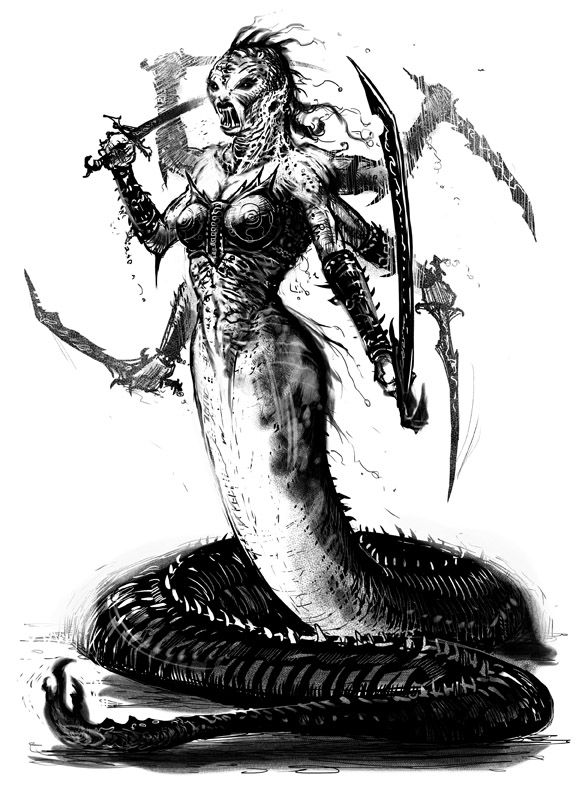
Actually Mariliths don't offend me so much either. I don't know that they look like demons to me but they look like they belong on a heavy metal album, which is good enough. Less convinced of the need for six arms, but I don't hate it either. They should not be as sexy as succubi, but there's no reason they can't have a sort of aggressive dominant sexuality about them-- nor is there any reason they have to be sexy.

Type VI
Balors are balrogs. And that just works, no need to reinvent the fucking wheel. Here's some nice balrogs. Downward curving horns are a must for me, on Balrogs and on black dragons alike.


 Succubi
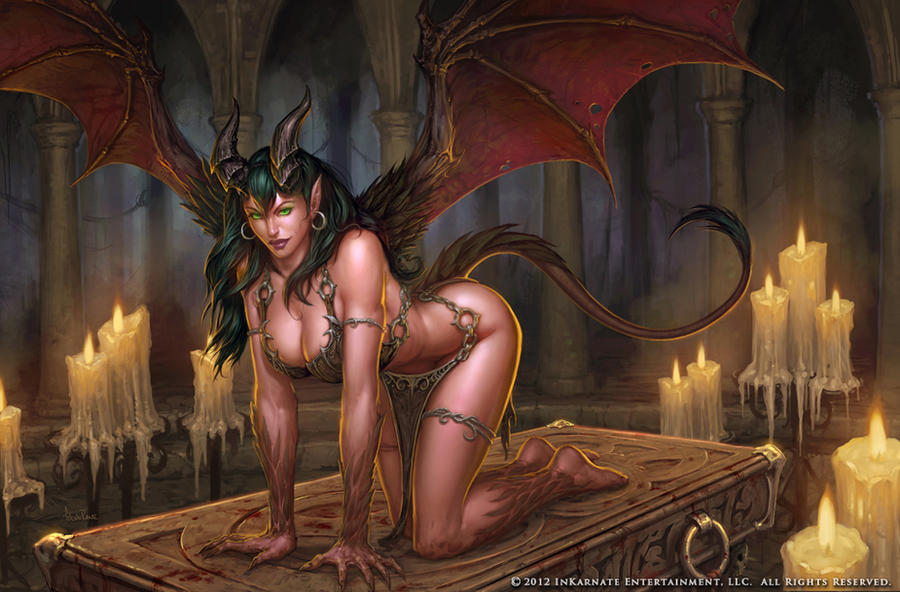
Well like I said before succubi are another one that I don't have an aesthetic problem with. Also, I'm not your fucking spank bank.
Well, okay, here's one.
 This is running a bit long so I'll put devils in their own post, up next.
Anyway, I want to relate what's happened to me this afternoon. I was looking through the "more like this" page for this picture:
And lo and behold: results!
Type I
I actually like Vrocks a lot. Something about a lanky, stooping vulture-man is Boschy enough to stand out, but seems classic enough to suit my sensibilities. In my mind they hardly need fixing at all, just a reminder that they should be less a person that is a vulture and more some kind of horrible vulture that walks like a man, so here's some that are just nice examples of awesome vulture demons:
Now Hezrou, them I don't like. D&D is littered with toad monsters, from slaads to bullywugs to froghemoths to just plain old giant frogs and toads. They need an angle. But starting from toad isn't too bad, toads are warty and gross and associated with witches sometimes. However the goal is less a toad-demon and more a demon that is sort of toadlike in execution. These three hit the spot for me:
Glabrezu are so absurdly specific in their design I thought I could never like one. But this is the pic that kicked this whole silly art show off. This doesn't look like a thrown-together mass of animal parts, it just looks like a demon to me.
I can't hate Nalfeshnee too much actually. I think boars work. But the standard of giving them tiny little angel wings is stupid-- I think maybe someone was trying to inject some sort of bathetic humor and failed. Still, the pig demon is a good concept. I always liked Ganon after all, and most of the pics here are of him
Actually Mariliths don't offend me so much either. I don't know that they look like demons to me but they look like they belong on a heavy metal album, which is good enough. Less convinced of the need for six arms, but I don't hate it either. They should not be as sexy as succubi, but there's no reason they can't have a sort of aggressive dominant sexuality about them-- nor is there any reason they have to be sexy.
Type VI
Balors are balrogs. And that just works, no need to reinvent the fucking wheel. Here's some nice balrogs. Downward curving horns are a must for me, on Balrogs and on black dragons alike.

Well like I said before succubi are another one that I don't have an aesthetic problem with. Also, I'm not your fucking spank bank.
Well, okay, here's one.
Tuesday, August 20, 2013
B/X class: I tell you, I tell you the Dragonborn comes (50th post wooo!)
Okay so I haven't thought this out 100%-- I was going to start by building this using the ACKS custom class guidelines, but I got impatient. As usual, honest criticism is the only way I'll learn. (For those of you playing at home, the ACKS Zaharan Ruinguard is the corresponding Tiefling class)
UPDATE: Here it is as a one-page, easy-to-print PDF if you want one.
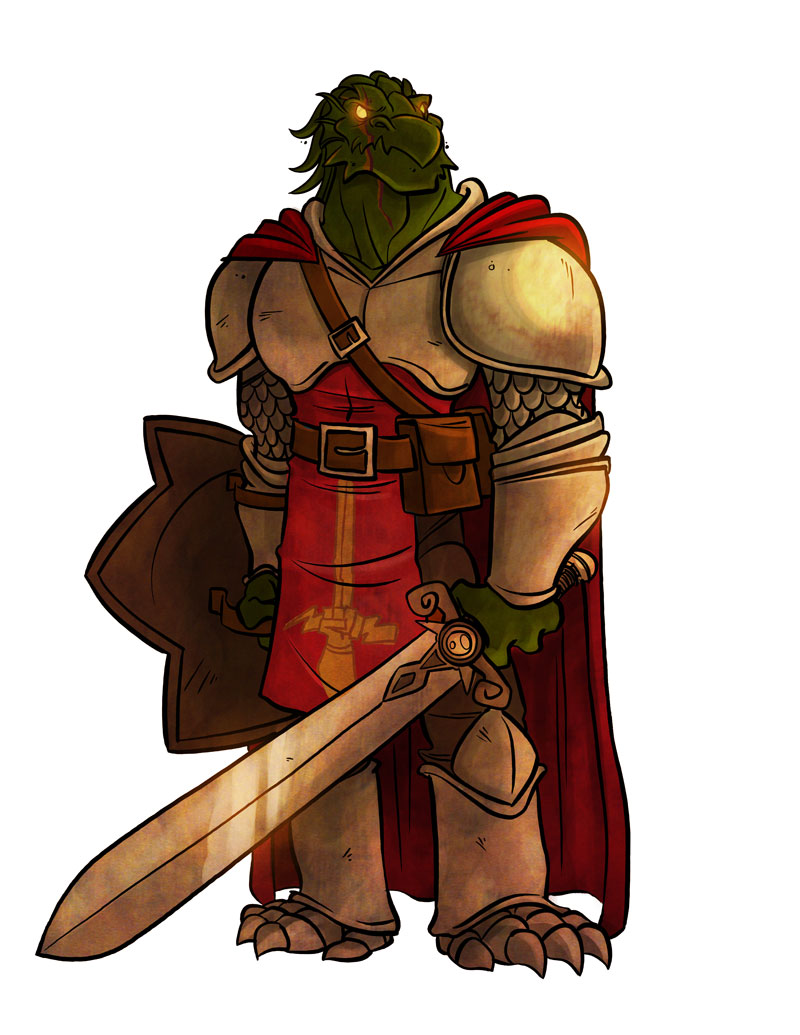
Dragonborn
Prime requisite: STR
Requirements: STR 9, CHA 7
Hit Dice: 1d8
Attack as: Fighter
Save as: Fighter
Advance as: Magic-Users
Maximum level: 11
Dragonborn are scaly, quasi-reptilian humanoids that claim descent from dragons-- a claim corroborated by the fact that they are found in the same colors (though usually more muted, earthy shades) as the various known species of dragon, and by the fact that many of them share a breath weapon with the dragons they closely resemble. Dragonborn tend to be about six feet tall and weigh over 200 lbs. Dragonborn are often very proud, serious and humorless, but exude a predatory confidence.
Restrictions: Dragonborn use 8-sided dice (d8) to determine their hit points. They may advance to a maximum of the 11th level of experience. Dragonborn may use any type of weapon or armor and may use shields. A Dragonborn character must have a minimum Strength of 9 and a minimum Charisma of 7.
Special Abilities: Dragonborn are covered in thick but flexible scales that give them a -2(+2) bonus to their AC. All dragonborn have a breath weapon similar to that of a dragon, usable three times per day but no more than once per hour, which deals 1d4 points of damage per level, to a maximum of 5d4 damage, along either a cone 40 feet long and 20 feet wide at its far end (if fire or cold), a 20-foot diameter cloud (if toxic gas), or a 60-foot line (if lightning or acid). A successful saving throw against Dragon Breath reduces the damage by half. A dragonborn gains a +2 bonus to any saving throws against damage of the same type as their breath weapon. Dragonborn speak the languages of dragons, kobolds, orcs, and goblins.
And as a monster...
Dragonborn
AC: 4 (15)
HD: 1+1
Move: 120' (40')
Attacks: 1 weapon plus breath weapon
Damage: 1d8 or by weapon
# Appearing: 1d4 (2d10)
Save as: F1
Morale: 9
Treasure Type: E
Alignment: Neutral
Dragonborn are reptilian humanoids that bear a resemblance to dragons. Like dragons, they have a breath attack (See above for details). All closely-related dragonborn will have the same type of breath attack. If a group of 15 or more Dragonborn appear, one will be a leader of level 2-9 (1d8+1). To check for magic items the leader may own, multiply the leader's level by 5. The result is the percentage chance for that leader to have a magic item from any subtable. Roll separately for every subtable. So long as the leader is alive morale is 11 rather than 9.
UPDATE: Here it is as a one-page, easy-to-print PDF if you want one.
Dragonborn
Art by Gabe
Prime requisite: STR
Requirements: STR 9, CHA 7
Hit Dice: 1d8
Attack as: Fighter
Save as: Fighter
Advance as: Magic-Users
Maximum level: 11
Dragonborn are scaly, quasi-reptilian humanoids that claim descent from dragons-- a claim corroborated by the fact that they are found in the same colors (though usually more muted, earthy shades) as the various known species of dragon, and by the fact that many of them share a breath weapon with the dragons they closely resemble. Dragonborn tend to be about six feet tall and weigh over 200 lbs. Dragonborn are often very proud, serious and humorless, but exude a predatory confidence.
Restrictions: Dragonborn use 8-sided dice (d8) to determine their hit points. They may advance to a maximum of the 11th level of experience. Dragonborn may use any type of weapon or armor and may use shields. A Dragonborn character must have a minimum Strength of 9 and a minimum Charisma of 7.
Special Abilities: Dragonborn are covered in thick but flexible scales that give them a -2(+2) bonus to their AC. All dragonborn have a breath weapon similar to that of a dragon, usable three times per day but no more than once per hour, which deals 1d4 points of damage per level, to a maximum of 5d4 damage, along either a cone 40 feet long and 20 feet wide at its far end (if fire or cold), a 20-foot diameter cloud (if toxic gas), or a 60-foot line (if lightning or acid). A successful saving throw against Dragon Breath reduces the damage by half. A dragonborn gains a +2 bonus to any saving throws against damage of the same type as their breath weapon. Dragonborn speak the languages of dragons, kobolds, orcs, and goblins.
And as a monster...
Dragonborn
AC: 4 (15)
HD: 1+1
Move: 120' (40')
Attacks: 1 weapon plus breath weapon
Damage: 1d8 or by weapon
# Appearing: 1d4 (2d10)
Save as: F1
Morale: 9
Treasure Type: E
Alignment: Neutral
Dragonborn are reptilian humanoids that bear a resemblance to dragons. Like dragons, they have a breath attack (See above for details). All closely-related dragonborn will have the same type of breath attack. If a group of 15 or more Dragonborn appear, one will be a leader of level 2-9 (1d8+1). To check for magic items the leader may own, multiply the leader's level by 5. The result is the percentage chance for that leader to have a magic item from any subtable. Roll separately for every subtable. So long as the leader is alive morale is 11 rather than 9.
Thursday, August 15, 2013
New Monster: Concept Elemental
I hate the elemental planes.
There. I said it.
Now I don't hate them quite as much as the great wheel, but they still smack of a bunch of dumb symmetry to me. I just don't like it. The 4e Elemental Chaos is a little better, but even then it's not what I need.
So what are Elementals in my mind? Simple: animistic spirits. Nature kami. Which raises two questions. First, is there an elemental for the part of nature which is living? We'll come to that one in a moment. Second, is there an elemental for things that are part of the experience of sapient creatures? It is this which is the subject of my post. I found my answer in, of all places, Dungeon World, which just goes to prove that anything is a sourcebook if you have the right mindset. Here's the monster as DW presents it in its entirety.
Unlike other elementals, all concept elementals have a subtype reflecting just what state of being or thought that they are born of. A spellcaster can learn (typically via a quest or magical tome) how to summon a particular subtype of elemental. In this case, if the proper environment is present, the summoning will always bring forth the desired subtype, but otherwise the kind of concept elemental called upon will be completely random. A spellcaster can learn how to summon a number of subtypes equal to 1/2 his level.
Unless otherwise indicated, any spell-like abilities are treated as being cast by a spellcaster with a level equal to the elemental’s Hit Dice. Some spell effects are from the Advanced Edition Companion (in bold) others are from the ACKS Player's Companion (underlined). In parentheses will be listed the circumstances in which a creature takes extra damage for them
There. I said it.
Now I don't hate them quite as much as the great wheel, but they still smack of a bunch of dumb symmetry to me. I just don't like it. The 4e Elemental Chaos is a little better, but even then it's not what I need.
So what are Elementals in my mind? Simple: animistic spirits. Nature kami. Which raises two questions. First, is there an elemental for the part of nature which is living? We'll come to that one in a moment. Second, is there an elemental for things that are part of the experience of sapient creatures? It is this which is the subject of my post. I found my answer in, of all places, Dungeon World, which just goes to prove that anything is a sourcebook if you have the right mindset. Here's the monster as DW presents it in its entirety.
So here's my attempt to give you the Concept Elemental. I will include a dozen subtypes as examples, following in the manner of Dyson.Concept Elemental Solitary, Devious, Planar, Amorphous
Special Qualities: Ideal formThe planes are not as literal as our world. Clothed in the elemental chaos are places of stranger stuff than air and water. Here, rivers of time crash upon shores of crystal fear. Bleak storms of nightmare roil and churn in a laughter-bright sky. Sometimes, the spirits of these places can be lured into our world, though they are infinitely more unpredictable and strange than mere fire or earth might be. Easier to make mistakes, too—one might try calling up a wealth elemental and be surprised to find a murder elemental instead. Instinct: To perfect its concept
- Demonstrate its concept in its purest form
- Lesser Elemental (Summoned by Staff) – 8 HD, AC 2, 1d8 damage
- Greater Elemental (Summoned by Devices) – 12 HD, AC 0, 2d8 damage
- True Elemental (Summoned by Spells) – 16 HD, AC -2, 3d8 damage
- Legendary Elemental (Summoned by Ritual) – 20 HD, AC -4, 4d8 damage
Unlike other elementals, all concept elementals have a subtype reflecting just what state of being or thought that they are born of. A spellcaster can learn (typically via a quest or magical tome) how to summon a particular subtype of elemental. In this case, if the proper environment is present, the summoning will always bring forth the desired subtype, but otherwise the kind of concept elemental called upon will be completely random. A spellcaster can learn how to summon a number of subtypes equal to 1/2 his level.
Unless otherwise indicated, any spell-like abilities are treated as being cast by a spellcaster with a level equal to the elemental’s Hit Dice. Some spell effects are from the Advanced Edition Companion (in bold) others are from the ACKS Player's Companion (underlined). In parentheses will be listed the circumstances in which a creature takes extra damage for them
- Wealth: Create objects as an Efreet (Carrying more than 100 GP/level in money, precious metals, or gems on their person)
- Murder: Death attack after three rounds of study, target must save vs. death. (Creatures that have killed in cold blood or for selfish reasons)
- Dream: Hallucinatory Terrain, Phantasmal Forces, or Sleep 1/round. (Creatures that are unconscious or asleep)
- Terror: Fear or Phantasmal Forces 1/round (creatures that are afraid, whether magically or because they failed a morale check)
- Peace: Sanctuary 1/round (Creatures who have made an attack in the last turn)
- War: Weapons used against it may stick to it, as an Iron Living Statue. (creatures wielding weapons)
- Madness: Attacks cause Confusion (Creatures that are Confused, charmed, or under the effects of an illusion, or are actually insane)
- Truth: Dispel illusions 1/round (Creatures that have broken their word in the last year)
- Time: Attack randomly ages or de-ages target 1d10 years (Creatures that have been outside of or traveled in time-- or creatures that experience time at all if you want to be a killer DM about it)
- Size: Attack randomly increases (as Growth) or decreases size (as a potion of dimunition)
- Love: Charm Person or Charm Monster 1/round (creatures that are charmed or in love)
- Community: Allied creatures within 50' need never make morale checks and are immune to fear (People who are not members of the community it represents)
Monster Lore
An adventurer that doesn't know the first thing about monsters isn't a very qualified adventurer. At the same time you don't want your players to have the ability to game the system with knowledge their character isn't likely to have. So here's a rule I propose:
If a character has a particular reason to know a lot about a given creature you might give him a bonus to the roll. If he's intimately familiar you might even let him ignore the "common knowledge" roll. This way your players are unlikely to go into an encounter completely ignorant of what they're facing. I mean surely they're not complete newbies, right? They've heard the campfire stories or read a few bestiaries or something. If you like you can have a chance of them knowing something false or trivial, but I wouldn't make it too high of a chance, the whole point is that PCs are reasonably informed about their own world.
Monster Knowledge: Upon encountering a monster for the first time, have each player roll a die... the exact size is up to you but I'd say that it oughta be at least a d6 and probably no more than a d10. They know a number of important facts about that monster equal to the number they rolled. Start with the players who rolled lowest (come up with your own method of breaking ties), then keep going until you reach the person who rolled highest. Everyone who rolled the same or higher has a 4 in 6 chance of already knowing the same fact. Important facts equal things like one special attack or defense ability (troll regeneration, for instance), the number of them that tend to group together, basically any statistical thing that can be rationalized in terms of actual in-character knowledge. Creatures that have a reason to be obscure (for instance because they're extraplanar, very rare, or newly created) might grant a penalty to the roll.
If a character has a particular reason to know a lot about a given creature you might give him a bonus to the roll. If he's intimately familiar you might even let him ignore the "common knowledge" roll. This way your players are unlikely to go into an encounter completely ignorant of what they're facing. I mean surely they're not complete newbies, right? They've heard the campfire stories or read a few bestiaries or something. If you like you can have a chance of them knowing something false or trivial, but I wouldn't make it too high of a chance, the whole point is that PCs are reasonably informed about their own world.
Saturday, July 20, 2013
What are Humanoids, anyway?
Over at his blog Beedo posted some rather clever alternative origins for humanoid monsters, to be used in a summer campaign for his children. It was a pretty interesting post and got me thinking about things. The origin I've used for most humanoids lately comes from half-remembered snippets of Norse mythology and from a somewhat slanted interpretation of describing the enemies that Dwarves and Rangers in AD&D 1e get special bonuses against as "giant class humanoids". My idea is that the "giant" in "giant class" doesn't (obviously) mean "huge", but perhaps means "man-like creations of primordial creatures that oppose the gods".
All well and good, but that leaves a few other humanoids unexplained: Lizardmen, Serpentmen (such as D&D's Yuan-ti), Frogmen (such as D&D's Bullywugs), and Troglodytes. Those all share the interesting quality of being amphibian or reptilian. Perhaps that implies a connection? A third set of creators? That might deserve some exploration of its own...
All well and good, but that leaves a few other humanoids unexplained: Lizardmen, Serpentmen (such as D&D's Yuan-ti), Frogmen (such as D&D's Bullywugs), and Troglodytes. Those all share the interesting quality of being amphibian or reptilian. Perhaps that implies a connection? A third set of creators? That might deserve some exploration of its own...
Friday, July 19, 2013
On the Herd Animal
The standard description of the Herd Animal entry in old school D&D and many retroclones suggests that the stats are useful for hooved animals such as goats, deer, and antelopes. But why stop there? There's plenty of other interesting herd animals out there. In my own time I've used those stats for Kangaroos, Emus, Ostriches, large tortoises, and all sorts of small, herbivorous dinosaurs. Small ones can be Hypsilophodon, Psittacosaurus, or Protoceratops. Larger ones can be things like Beipiaosaurus, Gallimimus, Maiasaura, Massospondylus, or even Pachycephalosaurus.
After all, those Tyrannosaurus Rexes in your lost world area have to have something to eat besides adventurers, don't they?
(As you might have gathered, I fucking love dinosaurs)
Friday, July 12, 2013
Revisiting two old posts
Looks like I'm not the only one interested in trying to give 4e-esque
monster abilities to humanoids in a gridless system-- the current
D&D Next playtest is doing the same, at least for some monsters.
I decided to download the latest playtest and see if what they've got
is any more applicable than I already had. Some of 'em are pretty
clever, but I think others need some work. I may have to do a second
take on that post with some cues from this.
Also, I finally got a look at Carcosa and its psionics system is everything I wanted to do a couple months ago except better handled.
Also, I finally got a look at Carcosa and its psionics system is everything I wanted to do a couple months ago except better handled.
Friday, July 5, 2013
Small animals for ACKS
Cat
% in Lair: 40%
Dungeon Enc: Solitary (1)/Clowder (1d6)
Wilderness Enc: Clowder (1d6)
Alignment:Neutral
Movement: 120' (40')
Armor Class: 2
Hit Dice: 1/2
Attacks: 1 (Claw)
Damage: 1d3-1
Save: Normal Man
Morale: 0
Treasure Type: Nil
Exp: 5
Monkey
% in Lair: 20%
Dungeon Enc: Troop (2d6)/Den (5d6)
Wilderness Enc: Band (5d6)/Den (5d6)
Alignment: Neutral
Movement: 120' (40')
Armor Class: 2
Hit Dice: 1
Attacks: 1 (Bite)
Damage: 1d3-1
Save: Normal Man
Morale: -1
Treasure Type: Nil
Exp: 5
Rat
% in Lair: 10%
Dungeon Enc: Pack (3d6)/Den (3d10)
Wilderness Enc: Horde (3d10)/Den (3d10)
Alignment: Neutral
Movement: 120' (40')
>Swim: 60' (20')
Armor Class: 0
Hit Dice: 1/4
Attacks: 1 (Bite)
Damage: 1d3-1
Save: Normal Man
Morale: 0
Treasure Type: A
Exp: 5
Raven
% in Lair: 20%
Dungeon Enc: None
Wilderness Enc: Flock (1d6)/Murder (2d6)
Alignment: Neutral
Movement: --
>Fly 330' (110')
Armor Class:1
Hit Dice: 1/4
Attacks: 1 (Peck)
Damage: 1d3-1
Save: Normal Man
Morale: -1
Treasure Type: A
Exp: 5
Owl
% in Lair: 20%
Dungeon Enc: None
Wilderness Enc: Solitary (1)/Nest (1d4)
Alignment: Neutral
Movement: 300' (100')
Armor Class: 1
Hit Dice: 1/2*
Attacks: 1 (Bite)
Damage: 1d2
Save: Normal Man
Morale: -1
Treasure Type: Nil
Exp: 7
Small animals such as these are commonly chosen by mages as their familiars.
Cats: Cats generally get on well with humans, and are kept as pets or to deal with vermin such as mice. They often attack from ambush if they can. The stats for a cat can also represent other small, mammalian predators such as foxes or weasels.
Monkeys: Monkeys often nest in treetops. Many humans find their climbing and leaping comical, but they are also relentless in defense of their nests. These stats represent small new world monkeys such as spider monkeys or capuchins, but they can also represent climbing animals of similar size such as Lemurs or Wallabies.
Rat: Ground-dwelling rodents, rats are a common pest all over the world, although some cultures admire their resourcefulness. Large groups of rats are better represented by a rat swarm. Some rats, like their giant brethren, carry disease. These stats can also easily be used for a number of other small, mostly-harmless animals such as toads, hedgehogs, squirrels or lizards,(by taking away their swim speed but making them good climbers), or rabbits (by taking away their swim speed and increasing their speed to 150'(50'))
Raven: Ravens are clever, omnivorous scavengers, and tend to hoard small, shiny objects in their nests. They are an extremely popular familiar. Some ravens can be taught to imitate speech. The stats for a raven can also be easily used for other largish birds such as parrots, gulls, and crows.
Owl: Owls are nocturnal hunters closely related to hawks. Owls can see perfectly well in darkness and have a +3 bonus to surprise checks do to their keen eyes and silent movements.
% in Lair: 40%
Dungeon Enc: Solitary (1)/Clowder (1d6)
Wilderness Enc: Clowder (1d6)
Alignment:Neutral
Movement: 120' (40')
Armor Class: 2
Hit Dice: 1/2
Attacks: 1 (Claw)
Damage: 1d3-1
Save: Normal Man
Morale: 0
Treasure Type: Nil
Exp: 5
Monkey
% in Lair: 20%
Dungeon Enc: Troop (2d6)/Den (5d6)
Wilderness Enc: Band (5d6)/Den (5d6)
Alignment: Neutral
Movement: 120' (40')
Armor Class: 2
Hit Dice: 1
Attacks: 1 (Bite)
Damage: 1d3-1
Save: Normal Man
Morale: -1
Treasure Type: Nil
Exp: 5
Rat
% in Lair: 10%
Dungeon Enc: Pack (3d6)/Den (3d10)
Wilderness Enc: Horde (3d10)/Den (3d10)
Alignment: Neutral
Movement: 120' (40')
>Swim: 60' (20')
Armor Class: 0
Hit Dice: 1/4
Attacks: 1 (Bite)
Damage: 1d3-1
Save: Normal Man
Morale: 0
Treasure Type: A
Exp: 5
Raven
% in Lair: 20%
Dungeon Enc: None
Wilderness Enc: Flock (1d6)/Murder (2d6)
Alignment: Neutral
Movement: --
>Fly 330' (110')
Armor Class:1
Hit Dice: 1/4
Attacks: 1 (Peck)
Damage: 1d3-1
Save: Normal Man
Morale: -1
Treasure Type: A
Exp: 5
Owl
% in Lair: 20%
Dungeon Enc: None
Wilderness Enc: Solitary (1)/Nest (1d4)
Alignment: Neutral
Movement: 300' (100')
Armor Class: 1
Hit Dice: 1/2*
Attacks: 1 (Bite)
Damage: 1d2
Save: Normal Man
Morale: -1
Treasure Type: Nil
Exp: 7
Small animals such as these are commonly chosen by mages as their familiars.
Cats: Cats generally get on well with humans, and are kept as pets or to deal with vermin such as mice. They often attack from ambush if they can. The stats for a cat can also represent other small, mammalian predators such as foxes or weasels.
Monkeys: Monkeys often nest in treetops. Many humans find their climbing and leaping comical, but they are also relentless in defense of their nests. These stats represent small new world monkeys such as spider monkeys or capuchins, but they can also represent climbing animals of similar size such as Lemurs or Wallabies.
Rat: Ground-dwelling rodents, rats are a common pest all over the world, although some cultures admire their resourcefulness. Large groups of rats are better represented by a rat swarm. Some rats, like their giant brethren, carry disease. These stats can also easily be used for a number of other small, mostly-harmless animals such as toads, hedgehogs, squirrels or lizards,(by taking away their swim speed but making them good climbers), or rabbits (by taking away their swim speed and increasing their speed to 150'(50'))
Raven: Ravens are clever, omnivorous scavengers, and tend to hoard small, shiny objects in their nests. They are an extremely popular familiar. Some ravens can be taught to imitate speech. The stats for a raven can also be easily used for other largish birds such as parrots, gulls, and crows.
Owl: Owls are nocturnal hunters closely related to hawks. Owls can see perfectly well in darkness and have a +3 bonus to surprise checks do to their keen eyes and silent movements.
Wednesday, July 3, 2013
New Monster: Vermin Queen
Inspired, of course, by the 4e Lamia. ACKS used for the rule set:
Vermin Queen
% in Lair: 30%
Dungeon Enc: Solitary (1)/Nest (1d3)
Wilderness Enc: Nest (1d3)
Alignment: Chaotic
Movement: 120'(40')
>Fly: 60' (20')
Armor Class: 2
Hit Dice: 6***
Attacks: 2 or 1 (2 Claws or weapon)
Damage: 1d6/1d6 or weapon
Save: M6
Morale: +2
Treasure Type: H
Exp: 1070
A Vermin Queen is a swarm of horrid, intelligent black beetles with the ability to assume the guise of a beautiful human or demihuman. They use their talent for disguise to waylay travelers in order to devour their flesh and steal their skins and their memories. When a Vermin Queen eats a living human, demihuman, or humanoid creature, another beetle is born to the swarm. When the swarm gets too big to comfortably fit into a human skin, half of it splits off and becomes a new vermin queen. The mother swarm typically deposits the daughter swarm in the body of its next victim in order to provide it with its first disguise.
A Vermin Queen can freely change between a humanoid form and swarm form once per round. The touch of a Vermin Queen in either form paralyzes, much like a ghoul. Attacking a Vermin Queen with a torch or weapon will inflict 1d4 points of damage to the swarm. Fire-based and cold-based attacks will also damage a Vermin Queen, and a sleep spell will cause the entire swarm to go dormant. While in swarm form, a Vermin Queen fights just like an insect swarm apart from its HD, morale, saves, and paralysis ability.
Vermin Queen
% in Lair: 30%
Dungeon Enc: Solitary (1)/Nest (1d3)
Wilderness Enc: Nest (1d3)
Alignment: Chaotic
Movement: 120'(40')
>Fly: 60' (20')
Armor Class: 2
Hit Dice: 6***
Attacks: 2 or 1 (2 Claws or weapon)
Damage: 1d6/1d6 or weapon
Save: M6
Morale: +2
Treasure Type: H
Exp: 1070
A Vermin Queen is a swarm of horrid, intelligent black beetles with the ability to assume the guise of a beautiful human or demihuman. They use their talent for disguise to waylay travelers in order to devour their flesh and steal their skins and their memories. When a Vermin Queen eats a living human, demihuman, or humanoid creature, another beetle is born to the swarm. When the swarm gets too big to comfortably fit into a human skin, half of it splits off and becomes a new vermin queen. The mother swarm typically deposits the daughter swarm in the body of its next victim in order to provide it with its first disguise.
A Vermin Queen can freely change between a humanoid form and swarm form once per round. The touch of a Vermin Queen in either form paralyzes, much like a ghoul. Attacking a Vermin Queen with a torch or weapon will inflict 1d4 points of damage to the swarm. Fire-based and cold-based attacks will also damage a Vermin Queen, and a sleep spell will cause the entire swarm to go dormant. While in swarm form, a Vermin Queen fights just like an insect swarm apart from its HD, morale, saves, and paralysis ability.
Sunday, June 9, 2013
The Fiend Folio...
Was not cool.
Never was. Never will be. Like... I think Aboleths are from it? But they're like the only interesting thing in the whole damned book.
ETA: July 3rd.
I guess I don't have anything against Lamia Nobles either, but regular lamia should have been snake ladies in the first place, I don't know WHERE the hell Gary got the whole lion centaur thing from. WTF. The Wis drain they both have is strange too.
Never was. Never will be. Like... I think Aboleths are from it? But they're like the only interesting thing in the whole damned book.
ETA: July 3rd.
I guess I don't have anything against Lamia Nobles either, but regular lamia should have been snake ladies in the first place, I don't know WHERE the hell Gary got the whole lion centaur thing from. WTF. The Wis drain they both have is strange too.
Tuesday, April 23, 2013
Differentiating humanoids
Okay, so, as those of you who know me are aware once upon a time your Auntie Rachel was a 4e player with the best of them. There are plenty of fine reasons I left it behind, but there were definitely elements of it that I like.
One of the things I liked best from 4e (Heresy!) is that different humanoid monsters had traits or powers that helped to mechanically differentiate the tactics they used in a fight. I've never been the most tactical of minds so having these was useful to me because it gave me a clearly understandable reason to change up how I had groups of humanoids fight. To that end, I've tried to do something similar for each of them. They aren't strict conversions, but they mostly take inspiration from the ones in 4e 'cause I was satisfied with those.
These are, of course, completely unplaytested.
Bugbear
Bugbears love nothing more than isolating their enemies to increase their fear. A bugbear gets a +4 bonus to attack rolls against an opponent that cannot see any allies or is separated from them by more than 10 feet.
Giant
A giant can grab a horse-sized or smaller opponent and squeeze or throw it. Squeezing works identically to a python's constriction. The giant can throw an opponent as far as he could a rock, dealing damage equal to the rock throw if he hits a hard surface, or half damage if he hits a soft surface. The giant can even throw an opponent at another opponent, dealing half damage to both. If you use a save for reducing falling damage, it applies to being thrown as well.
Gnoll
Gnolls are vicious pack fighters. Should a gnoll hit with a melee attack, it deals extra damage equal to the number of other gnolls within melee range of its target, to a maximum of +5.
Goblin
Goblins are cowards with only the barest concept of loyalty. A goblin can make a fighting withdrawal at full speed as long as its opponent is within melee range of at least one other hostile creature.
Hobgoblins
Hobgoblins are as disciplined as Goblins are cowardly. A hobgoblin gains a +1 bonus to AC for every hobgoblin that stands within 5 feet of it, to a maximum of +4.
Kobold
Kobolds always know when they're outmatched. If a melee attack misses a kobold, it can safely retreat at full speed.
Lizardfolk and Troglodyte
At least in BFRPG (I'd have to check others to be sure), there's already mechanical support for Lizardfolk and Troglodytes as ambush predators, because they surprise on 1-4 in 1d6 if they can hide in water or underground, respectively. I might expand that to sand as well in the case of lizardfolk, because I've had desert lizardfolk from time to time.
Ogre
An ogre's strength is such that it can sacrifice its +3 damage bonus in order to push a man-sized or smaller opponent 10 feet away or knock it prone. If the force of the blow results in an opponent being dashed against a hard surface (but not the floor), it deals 1d2 additional damage and the opponent must save vs. paralysis or be dazed and unable to act for one round.
Orc
Orcs are ferocious to the last. Upon being reduced to 0 HP, an orc can make one last attack before falling.
These are just sort of me rolling ideas around in my head, I don't know if they're quite perfect yet.
Subscribe to:
Posts (Atom)